

Language and Learning
My Child has Additional Needs
This page includes contributions from both the babyhearing.org team and the team that developed a website for families focused on raising deaf kids. For more information, see About Us.
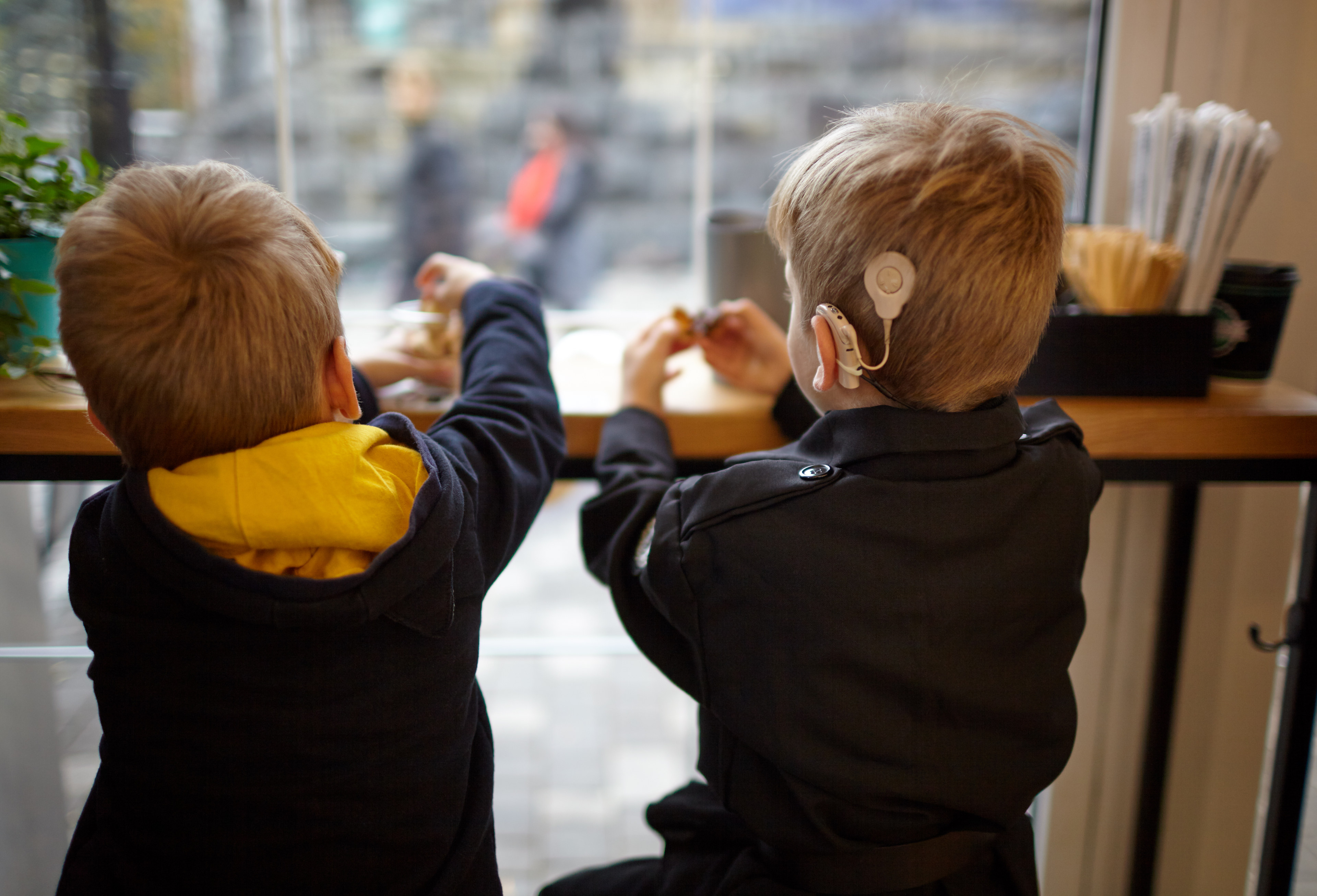
Sometimes, young children who are deaf or hard of hearing (DHH) have developmental needs beyond hearing, such as vision impairment, cognitive delays, autism, or motor or balance challenges.
If your child has other disabilities in addition to being deaf or hard of hearing, you may feel overwhelmed. You might feel like your child is the only one in this situation. Maybe you find it hard to accept that your child has other problems. You're not alone. It is estimated that 30% to 40% of all children who are deaf or hard of hearing have other disabilities. It is important to address the multiple needs of the child.
Love your child for who he is
It may be hard to accept that your child has multiple needs. It is helpful to love your child for who he is. If you do, he will learn to love himself, too.
All children are different
Children with other disabilities are all different. They have different kinds of disabilities. They work at different levels, and they learn in different ways. No one can say what your child can or can't do.
Work with your educational team to identify and address additional needs
Depending on the age of your child, your IFSP (Individualized Family Service Plan) or IEP (Individualized Educational Plan) team will work with you to address
- how the disability impacts development
- what adaptations and adjustments are needed to meet the child's needs
- how your child's education can be individualized
Types of Additional Special Needs or Disabilities
In the following section, information is provided about disabilities that your child may have in addition to being deaf or hard of hearing. For each entry, you will find a description of the disability taken from a National resource and links to other resources. Please note: The list of resources is not exhaustive, and the inclusion of a resource does not imply endorsement.
ADHD (Attention Deficit and Hyperactivity Disorder)
What is ADHD?
Center for Disease Control and Prevention
Learn more about treating ADHD at What is ADHD? | CDC
Other Resources
- National Institute of Mental Health: NIMH ADHD
- Children and Adults with ADHD (CHADD): CHADD Resource Directory
Apraxia
What is Apraxia?
- National Institute on Deafness and Other Communication Disorders: NIDCD Apraxia
- The American Speech-Language-Hearing Association: ASHA Apraxia
Other Resources
- Apraxia Kids: apraxia-kids.org
- Child Apraxia Treatment: Once Upon a Time Foundation: childapraxiatreatment.org
Autism Spectrum Disorder
What is Autism Spectrum Disorder?
- Center for Disease Control and Prevention: CDC Autism Facts
- National Institute on Deafness and Other Communication: NIDCD Autism
Other Resources
- Autism Speaks: autismspeaks.org
- American Speech-Language-Hearing Association Augmentative-and-Alternative Communication: ASHA AAC
- The Interdisciplinary Council on Developmental and Learning Disorders: ICDL autism guide for parents
Cerebral Palsy
What is Cerebral Palsy?
Center for Disease Control and Prevention: CDC Cerebral Palsy Facts
Other Resources
- United Cerebral Palsy Association: ucp.org
- CPF - Cerebral Palsy Foundation: yourcpf.org
- University of Virginia Pediatrics: UVA Cerebral Palsy
More Types of Additional Special Needs
Anxiety and Depression
What is Anxiety and Depression?
Other Resources
- National Institute of Mental Health: NIMH Depression
- NIMH Publications: nimh.nih.gov/health/publications
- Childhood Depression | Anxiety and Depression Association: ADAA Childhood Depression
- Treatment for depression in young children | National Institutes of Health: NIH Research
Bipolar Disorder
What is Bipolar Disorder?
- National Institute of Mental Health: NIMH Bipolar
- American Psychiatric Association: APA Bipolar
- Anxiety and Depression Association: ADAA Bipolar
Other Resources
- DBSA - Depression and Bipolar Support Alliance: dbsalliance.org
Learning Disability
What is Learning Disability?
- Center for Disease Control and Prevention: CDC Learning Disorder
- National Institute for Learning Development: NILD Warning Signs
Other Resources
- International Dyslexia Association: dyslexiaida.org
- Learning Disability Association of America: ldaamerica.org
- National Center for Learning Disorders: ncld.org
- National Institute of Child Health and Human Development: nichd.nih.gov
Obsessive-Compulsive Disorder
What is Obsessive-Compulsive Disorder?
Other Resources
- Obsessive-Compulsive Disorder: When Unwanted Thoughts Take Over - A brochure that offers basic information about OCD, including signs and symptoms, treatment, and finding help. NIMH OCD Brochure
Oppositional Defiant Disorder
What is Oppositional Defiant Disorder?
Other Resources
- Pediatric Psychiatry Pamphlet about ODD: AACAP ODD Guide
- Positive Parent Tips for Young Children: CDC Parent Tips
- Positive Parenting Tips: CDC Positive Parenting
Tourette Syndrome
What is Tourette Syndrome?
Other Resources
- Tourette Syndrome Association of America: tourette.org
- KidsHealth's page on Tourette syndrome: KidsHealth Tourette
Usher Syndrome
What is Usher Syndrome?
Other Resources
- American Association of The Deaf Blind: aadb.org
- National Deaf-Blind Association: nationaldb.org
- Helen Keller: Helen Keller Usher Syndrome
Finding Support
You may have trouble finding people who know all about being deaf or hard of hearing and your child's other disabilities. You can find more information on additional services and specialists at: Additional Services and Specialists