



Parenting and Support
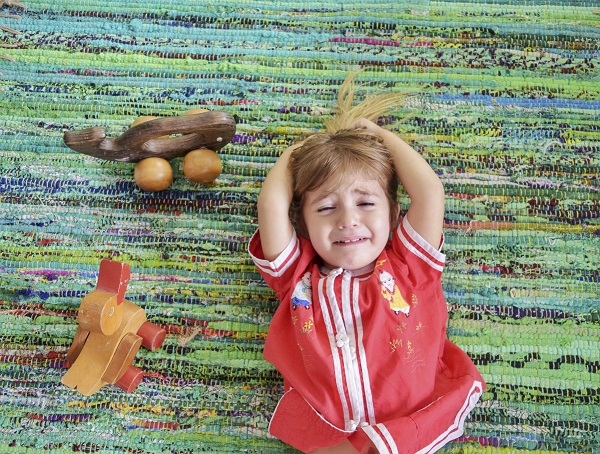
It is common for young children to have tantrums at times. When children are deaf or hard of hearing, they may have tantrums if they do not have the words to express what they need, want or feel. In these situations, their behavior is “communication.” As your baby’s communication with you grows. many of these tantrums will disappear.
Behavior Management Becomes Easier As Communication Strengthens
We need to avoid attributing too many behavior problems to being deaf or hard of hearing.
We can use many of the same techniques that we use with any child to help them behave well by using the following tools.
Identify Trigger Behaviors
Watch for warning signs in your child, and respond to them.
Ignore the Behavior
Ignore the behavior if your baby's tantrum seems to be the result of wanting more attention than you are able to give.
Remove Your Baby from the Situation
If your little one "melts down" over not getting a new toy at the store, calmly remove the child from the store. If the situation or setting is interesting/fun to your child, then having to leave will be a strong message: "I can't behave this way in here."
Help the Child Calm
Hold the child gently against your body and breathe slowly and quietly, giving you both a chance to calm down. Small children often cannot calm themselves, but adults can help them.
Look for Opportunities for Positive Interactions
Forgive the tantrum as soon as it is over. Catch your toddler smiling, or looking at something, or vocalizing and respond quickly with a positive interaction.
Your child will find that positive attention is much more interesting than having a tantrum, unless the tantrum itself is the best way of attracting your attention.
Stay calm, ignore as much as you can, and make other times more interesting. Most of all, keep on learning to communicate.
More About Dealing with Tantrums*
*Information in the following sections was originally developed by the team that created a website on ‘raising deaf kids’ (see About Us). The content may have been edited or updated. Resources from Boys Town Pediatrics have been added.
Read the following sections to learn about additional ways to deal with your child's tantrums.
What is a temper tantrum
Understand why your child has tantrums
What to do during a tantrum
What to do after a tantrum
Sample stories to help with tantrums

What is a temper tantrum?
Temper tantrums happen when your child loses control of her feelings. Every child has strong feelings sometimes - it's normal. Your child might get very mad, sad, tired, or hungry. She hasn't learned how to control her behavior yet, so she might start crying, screaming, kicking, hitting, or even holding her breath.
Temper tantrums can be a very hard part of being a parent. All young children have temper tantrums:
- Tantrums usually happen in children ages 1 to 3, but they can happen later on too.
- Girls and boys both have tantrums.
- Both kids who hear and those who are deaf or hard of hearing (DHH) have tantrums. If your child does not have a lot of language, she can't tell you what she wants or how she feels using words or signs. This can make her more frustrated and she may have more tantrums than other children. If you cannot communicate with your child in the same language, she will have more tantrums, even when she is older.
For help with tantrums, visit:
Toddler Tantrums (boystownpediatrics.org)
Taking the Terror Out of Toddler Tantrums (boystownpediatrics.org)
Managing Your Child's Behavior in Public (boystownpediatrics.org)
Understand Why Your Child Has Tantrums
Even though tantrums are normal, they can be very hard for you to deal with. Kids have tantrums for different reasons
By understanding these reasons, you can try to stop tantrums before they start. Your child might have a tantrum because she:
- Is tired
- Is hungry
- Is uncomfortable (for example, too hot or sick)
- Is frustrated
- Is scared or nervous
- Wants more attention
- Wants something she can't have
Children who are deaf or hard of hearing (DHH) might also have tantrums when they can't communicate what they are thinking and feeling. The feeling of frustration builds up and the tantrum releases some of the tension.
How to avoid tantrums
The best way to deal with tantrums is to prevent them, if possible. Here are some things you can do to prevent tantrums:
- Make sure your child is getting enough sleep.
- Regular naps can help.
- If you know your child will have to stay up late one night, try to let her take a longer nap that day.
- Make sure your child eats and drinks often.
- Young children have small stomachs. They need to eat a little bit every few hours.
- Remember to pack snacks for long trips.
- Think of the family rules that are important to you.
- Some family rules may include 'no hitting' and 'no destroying things'.
- Keep the rules simple and clear.
- Make sure the rules are realistic. Don't expect a very young child not to ever cry or yell.
- Explain the rules to your child. It's very important for your child who is DHH to know the rules ahead of time, because she might not hear when you say "no."
- Don't give her what she wants when she is having a tantrum. This will teach her to tantrum whenever she wants something.
- Don't bend the rules for your child just because she's DHH! Children who are DHH need the same rules as hearing children.
Why some children who are DHH have tantrums<br>
Sometimes children who are DHH have tantrums when they are confused and don't know what is happening. They can't hear you talk about the plans for the day, and then they are not ready when it's time to go someplace.
- If your child is very young, you can make a picture book with photos that show different places you will go (e.g., the doctor, grocery store, playground, grandma's house). Then you can show your child where you are going in the picture book. You can make a picture book with cutouts showing her favorite foods to eat, so she can show you what she wants when she is hungry.
- If your child is older, you can write a story about the time that makes her most upset, like going to the doctor, or taking medicine. The story can explain what is happening. You can add signs to the pictures and words if she uses sign language to communicate.
- You can write a story to explain to your child what you want her to do, like use the potty instead of her diaper. These stories will help explain things, and there will be fewer tantrums.
What to Do During a Tantrum
The most important thing for you to do is keep calm. This is because your child will copy your behavior, now and later.
When your child has a tantrum:

When your child starts getting upset, try these things to help keep both of you calm:<br>
Make sure your child is safe:
Try to distract your child:
Give your child a time-out:
Ignore your child:
Don't give in:
What to Do After a Tantrum
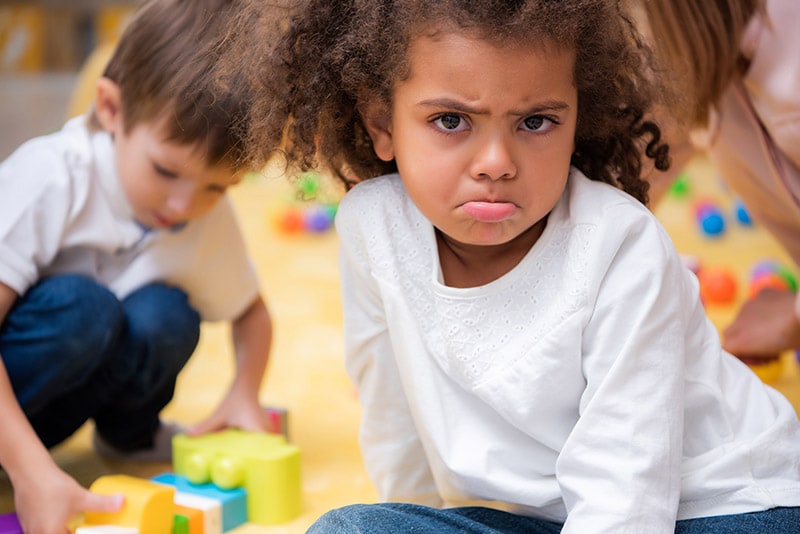
Forgive your child right away
Teach your child better ways to express her feelings.
You can keep notes about the tantrums
Write down:
These notes will help you understand why the tantrums are happening, and help you address the problem.
Get help
Ask your child's doctor for help if:
Learn more
Sample Stories to Help with Tantrums
You can write a short, simple story to help your child<br>
Make the story personal to your child's needs, and reading and language abilities
Read the story with your child for the first time when she's in a good mood
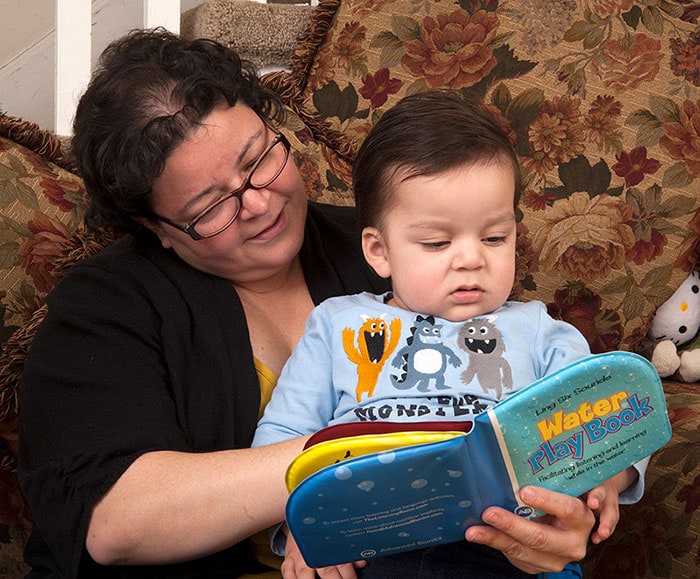
Keep the story book around so she can look at it herself or read it again later. For example, if you have a story about tantrums:
Here are two examples of these stories:
1. If your child has tantrums when she has to share a toy, you could write a story like this, filling in the blanks and adding photos and pictures to make the story personal for your child:
My name is . I like playing with a lot of different toys.
Some of my favorite toys are , , and . Other children also like to play with toys.
When other kids are around, at school or at home, we can take turns and share toys. I can have one toy and they can have one. Later, we can trade toys.
Sometimes, I will have to wait for my turn to play with the toy I really want. It is hard to be patient!
I have to give everyone a chance to play with that toy, too. This way we can all get along and have fun playing together. Mommy says she is proud of me for sharing and playing nicely.
I am happy when I can play with friends and my family- it's FUN!
You can illustrate the story using photos from your phone or digital camera.
2. You could write a story to help your child learn how to control her angry feelings. Consider working together to illustrate the story with some simple pictures you take on your phone or digital camera:
My name is _______________
Sometimes, my teacher tells me I have to wait to use the computer or mom tells me that I need to go to ned. That makes me feel very upset, frustratied, and angry.
Mom says that everybody feels that way some of the time. All kids and grown-ups sometimes get angry.
It's important to keep thinking, even when I'm upset. Here are some good things to think about the next time I'm upset:
Here are some good things to do the next time I'm upset:
I feel better when I am calm, and proud of myself too! I can practice and be calm at home and at school now!