
Language and Learning
Babies are curious. Being curious helps them to learn. When babies are curious, they ask questions.
- Your baby may not ask questions with words, but when you see your baby look around the room for the toy that rolled under the couch, you know the question is "Where?"
- When your baby picks up a new object and looks at you with a puzzled face, you know the question is "What's this?"
- When the teddy bear's button eye suddenly comes off and your baby shows it to you, you know the question is "What happened?"
Strategies to Promote Question-Asking
It might look like this:
"Mom: (Asks herself in speech) "Hmmmmm. Where is John?" (Puts child's thought into words)."Let's ask Dad." (Models for baby) "Dad, where is John?"
Dad: (Answers at the baby's eye level) "He is outside." Mom: (To baby). "Okay…that's where! Let's go outside and find John!"
"Dad: "No thanks, I'm full." (Turns to John). How about you, John? Do you want more?"
John: "Yes – I love potatoes." (Turns to his little sister). "Do you want potatoes?"
Sister: "Yes!" (This routine supported the child to understand how to answer a simple question. The context gives a lot of support at first. Later, it will not be needed.)
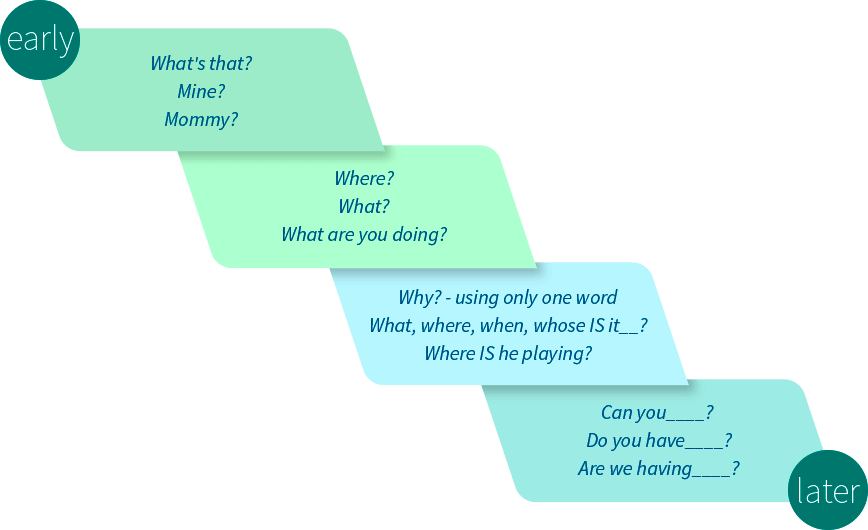
Which questions develop early? Which ones take more time?
Our children go through many stages of development – such as when they are learning to stand. This is true for understanding and asking questions, too!
The model below shows a developmental progression in question-asking from early to later types.